

Samoosas and frozen savouries
Samoosas & Savouries
2 Min Read
How to Choose the Right Samoosa Size
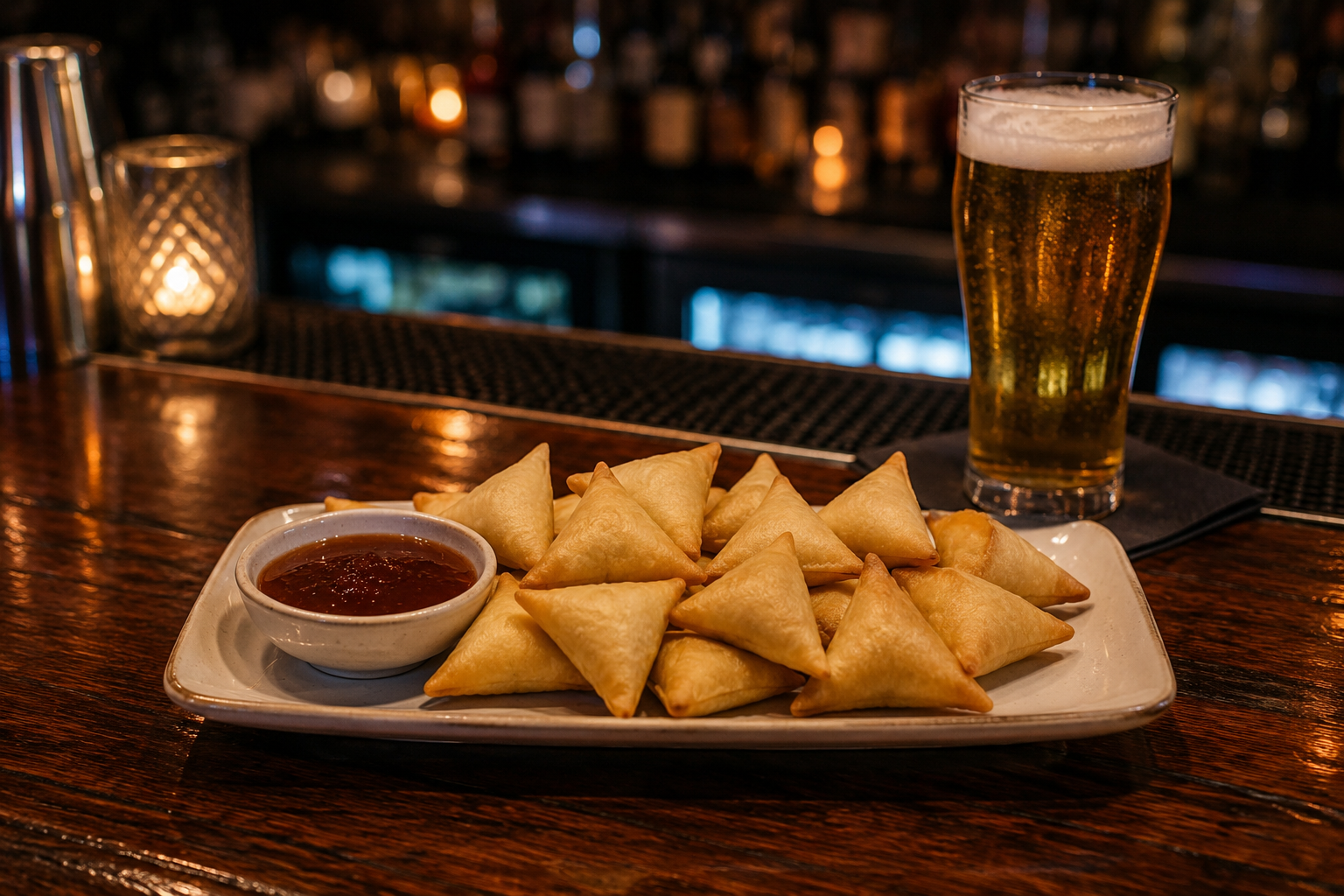
Choose an appropriate samoosa size for platters, delis, catering, meals and grab-and-go service.
The right samoosa size depends on how the product will be sold, what accompanies it and what the customer expects to pay. A smaller samoosa is not automatically better value, and a larger samoosa is not automatically the better choice. The correct size is the one that fits the occasion and supports the required portion cost.
Start with the role on the menu
Ask what job the samoosa needs to perform:
· Cocktail or platter item: Smaller units allow guests to sample several foods.
· Side or appetiser: A regular-sized unit can accompany a meal without dominating it.
· Individual snack: A larger unit provides more substance and stronger visual value.
· Meal component: One large or several regular units can be combined with sides, salad or sauces.
· Hot-food counter: The product must look substantial enough to justify its selling price while fitting the display and packaging.
Compare weight, not only dimensions
Two samoosas can have similar side lengths but different weights, pastry thicknesses and fill quantities. Request the unit weight and assess the cooked product. For reference, JONDAY's regular handmade samoosa is approximately 45 g and 95 mm per side, while its large format is approximately 80 g and 120 mm per side.
Consider the complete operating model
Evaluate:
1. Intended selling price
2. Required gross margin
3. Number of units per serving
4. Preparation time
5. Hot-holding space
6. Packaging size
7. Customer appetite and occasion
8. Product mix around the samoosa
The best decision comes from testing the product in the actual service environment. Record cooking yield, customer response, waste and reorder performance before committing to a wider rollout.
Need help selecting the right samoosa size or format for your operation? Contact JONDAY Foods to discuss your expected volume, equipment and service model.
Contact JONDAY Foods to discuss your expected volume, equipment and service model.
Contact JONDAY
Manufacturers of superior quality frozen food since 1985, distributing across South Africa, Canada and the USA.


Samoosas and frozen savouries
Samoosas & Savouries
2 Min Read
How to Choose the Right Samoosa Size
Choose an appropriate samoosa size for platters, delis, catering, meals and grab-and-go service.
The right samoosa size depends on how the product will be sold, what accompanies it and what the customer expects to pay. A smaller samoosa is not automatically better value, and a larger samoosa is not automatically the better choice. The correct size is the one that fits the occasion and supports the required portion cost.
Start with the role on the menu
Ask what job the samoosa needs to perform:
· Cocktail or platter item: Smaller units allow guests to sample several foods.
· Side or appetiser: A regular-sized unit can accompany a meal without dominating it.
· Individual snack: A larger unit provides more substance and stronger visual value.
· Meal component: One large or several regular units can be combined with sides, salad or sauces.
· Hot-food counter: The product must look substantial enough to justify its selling price while fitting the display and packaging.
Compare weight, not only dimensions
Two samoosas can have similar side lengths but different weights, pastry thicknesses and fill quantities. Request the unit weight and assess the cooked product. For reference, JONDAY's regular handmade samoosa is approximately 45 g and 95 mm per side, while its large format is approximately 80 g and 120 mm per side.
Consider the complete operating model
Evaluate:
1. Intended selling price
2. Required gross margin
3. Number of units per serving
4. Preparation time
5. Hot-holding space
6. Packaging size
7. Customer appetite and occasion
8. Product mix around the samoosa
The best decision comes from testing the product in the actual service environment. Record cooking yield, customer response, waste and reorder performance before committing to a wider rollout.
Need help selecting the right samoosa size or format for your operation? Contact JONDAY Foods to discuss your expected volume, equipment and service model.
Contact JONDAY Foods to discuss your expected volume, equipment and service model.
Contact JONDAY
Related guides
View all guides
Handmade vs Machine-Made Samoosas
Raw vs Pre-Fried Samoosas
Manufacturers of superior quality frozen food since 1985, distributing across South Africa, Canada and the USA.
Home
Products
About
Distributors
Certifications
Knowledge Center
Contact
Send Query
Samoosas and frozen savouries
Samoosas & Savouries
2 Min Read
How to Choose the Right Samoosa Size
Choose an appropriate samoosa size for platters, delis, catering, meals and grab-and-go service.
The right samoosa size depends on how the product will be sold, what accompanies it and what the customer expects to pay. A smaller samoosa is not automatically better value, and a larger samoosa is not automatically the better choice. The correct size is the one that fits the occasion and supports the required portion cost.
Start with the role on the menu
Ask what job the samoosa needs to perform:
· Cocktail or platter item: Smaller units allow guests to sample several foods.
· Side or appetiser: A regular-sized unit can accompany a meal without dominating it.
· Individual snack: A larger unit provides more substance and stronger visual value.
· Meal component: One large or several regular units can be combined with sides, salad or sauces.
· Hot-food counter: The product must look substantial enough to justify its selling price while fitting the display and packaging.
Compare weight, not only dimensions
Two samoosas can have similar side lengths but different weights, pastry thicknesses and fill quantities. Request the unit weight and assess the cooked product. For reference, JONDAY's regular handmade samoosa is approximately 45 g and 95 mm per side, while its large format is approximately 80 g and 120 mm per side.
Consider the complete operating model
Evaluate:
1. Intended selling price
2. Required gross margin
3. Number of units per serving
4. Preparation time
5. Hot-holding space
6. Packaging size
7. Customer appetite and occasion
8. Product mix around the samoosa
The best decision comes from testing the product in the actual service environment. Record cooking yield, customer response, waste and reorder performance before committing to a wider rollout.
Need help selecting the right samoosa size or format for your operation? Contact JONDAY Foods to discuss your expected volume, equipment and service model.
Contact JONDAY Foods to discuss your expected volume, equipment and service model.
Contact JONDAY
Related guides
View all guides
Handmade vs Machine-Made Samoosas
Raw vs Pre-Fried Samoosas
Manufacturers of superior quality frozen food since 1985, distributing across South Africa, Canada and the USA.